
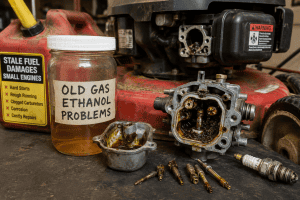
How Old Gas Damages Small Engines — And How to Prevent Costly Repairs
Article Summary
Old gasoline can cause serious problems for lawn mowers and other small engines, especially when fuel containing ethanol sits for extended periods. Learn what happens inside the fuel system, why carburetors are particularly vulnerable, and how proper fuel care can help prevent costly repairs.
That Gas Sitting in Your Lawn Mower Isn't Getting Better With Age...
When a lawn mower, snow blower, generator, or other piece of outdoor power equipment refuses to start after sitting for several months, it’s easy to assume something mechanical has broken.
Sometimes the problem is much simpler:
The gasoline has gone bad.
Unlike some products that can sit on a garage shelf for years without changing significantly, gasoline begins deteriorating relatively quickly. Briggs & Stratton advises that untreated gasoline can begin breaking down after approximately 30 days.
That becomes particularly important with small engines because many pieces of outdoor power equipment are seasonal.
A lawn mower may sit throughout the winter. A snow blower may remain unused throughout the summer. A generator might not be started for months between power outages.
During all that time, gasoline left inside the equipment continues to age.
And the carburetor may be one of the first places where problems appear.
What Happens to Gasoline as It Gets Old?
Gasoline is a complex mixture of volatile compounds. Once gasoline is manufactured—and especially after it is exposed to air—it begins changing.
Some of its more volatile components gradually evaporate, while oxidation and other chemical changes take place.
Eventually, deteriorating gasoline can form sticky deposits commonly described as gum or varnish.
That may not sound particularly destructive until you consider the extremely small openings inside a carburetor.
The carburetor’s job is to supply the engine with the proper mixture of fuel and air. To accomplish that, gasoline has to travel through very small jets and passages.
It doesn’t take a large amount of residue to interfere with them.
Deposits from deteriorated gasoline can partially restrict or completely clog these passages, disrupting the amount of fuel reaching the engine.
The result can be an engine that:
- Is difficult to start
- Starts but quickly stalls
- Runs roughly
- Surges while running
- Hesitates under load
- Requires repeated attempts to start
- Will only run with the choke engaged
- Doesn’t start at all
In some cases, adding fresh gasoline to the tank isn’t enough. If deteriorated fuel has already left deposits inside the carburetor, the carburetor may need professional cleaning, rebuilding, or replacement.
Why Carburetors Are Especially Vulnerable
Small-engine carburetors have an important job to do with very little room for error.
Inside the carburetor are small openings and fuel-metering passages designed to deliver a precise amount of gasoline into the incoming air stream.
When gasoline is fresh and the fuel system is clean, this process happens continuously while the engine is operating.
When gasoline sits inside the carburetor for an extended period, however, the fuel can deteriorate right where some of the engine’s smallest fuel passages are located.
As gasoline evaporates from the carburetor bowl, it can leave residue behind. Over time, that residue can accumulate.
This is why draining only the gasoline tank may not always solve a storage-related fuel problem. Fuel can remain inside the carburetor even after the tank has been emptied.
Briggs & Stratton specifically recommends removing stale fuel from both the fuel tank and the carburetor float bowl when dealing with old gasoline.
What Does Ethanol Have to Do With Small-Engine Problems?
Most gasoline sold at service stations today contains ethanol.
E10 gasoline contains up to 10% ethanol and is approved for many modern small engines. Manufacturers including Briggs & Stratton, Honda, and STIHL specify gasoline containing no more than 10% ethanol for many of their small-engine products.
That distinction is important.
E10 and E15 are not the same fuel.
Gasoline containing 15% ethanol (E15), E85, and other higher-ethanol fuels should not automatically be used in outdoor power equipment simply because they’re available at the gas station.
Always follow the fuel requirements listed in the equipment manufacturer’s owner’s manual.
Even when an engine is designed to operate on E10 gasoline, ethanol-blended fuel requires proper handling and storage—particularly when equipment is used infrequently.
Ethanol and Moisture
One characteristic of ethanol is especially important to small-engine owners: ethanol attracts water.
Moisture can enter a fuel system through humid air, condensation, contaminated storage containers, or other sources.
At lower levels, water can remain mixed with the ethanol-containing gasoline. When enough water accumulates, however, the mixture can separate.
This is known as phase separation.
When phase separation occurs, a water-and-ethanol-rich layer can settle toward the bottom of the fuel tank.
That’s particularly troublesome because the bottom of the tank is also where the engine typically draws its fuel.
Instead of receiving the gasoline mixture it was designed to burn, the engine can receive a mixture containing excessive water and ethanol.
The result can include poor performance, difficult starting, corrosion, and other fuel-system problems.
Is the Dye in Gasoline Bad for Small Engines?
Gasoline may contain dyes and numerous additives, which sometimes leads equipment owners to assume that visible coloration in old fuel is responsible for carburetor problems.
The more important issues are typically fuel deterioration, oxidation, evaporation, deposits, ethanol concentration, moisture contamination, and the compatibility of fuel-system components with the fuel being used.
Color alone is not a reliable way to determine whether gasoline is safe to use.
Old gasoline may change in appearance or odor as it deteriorates, but gasoline that looks relatively normal may still have degraded enough to cause performance problems.
For that reason, it’s better to consider the age and storage conditions of the gasoline rather than relying solely on its color.
Why Small Engines Can Have More Trouble Than Your Car
A common question is:
If ethanol gasoline works in my car, why can it cause so many problems in my lawn mower?
One major difference is how frequently the equipment is used.
Most vehicles are driven regularly. Fuel is continually consumed and replaced with fresh gasoline.
Outdoor power equipment can be very different.
A homeowner might use a lawn mower every week during summer and then park it for several months. A snow blower may not run at all during a mild winter. A generator could sit unused until the next major storm.
Small engines also use carburetors and fuel systems containing very small passages that can be particularly susceptible to deposits and contamination.
It’s often the combination of time, storage, moisture, deteriorating fuel, and small fuel passages that creates the problem.
How Quickly Does Gasoline Go Bad?
There isn’t one exact expiration date for every gallon of gasoline because storage conditions, fuel formulation, container type, temperature, and other factors matter.
However, equipment manufacturers take fuel age seriously.
Briggs & Stratton states that untreated gasoline can begin breaking down in approximately 30 days.
STIHL recommends purchasing only enough standard pump gasoline to be used within about 60 days and says fuel should preferably not be stored or used beyond 30 days.
The safest approach is simple:
Buy fresh gasoline in quantities you’ll actually use.
A five-gallon container isn’t a bargain if three gallons sit in your garage long enough to cause a carburetor repair.
Can Fuel Stabilizer Make Old Gas Good Again?
Fuel stabilizer can be very useful—but there’s an important misconception about what it does.
Fuel stabilizer helps preserve fresh gasoline. It doesn’t restore gasoline that has already deteriorated.
Adding stabilizer to months-old gasoline doesn’t reverse oxidation, remove contamination, or magically dissolve every deposit that has already formed inside the carburetor.
If you’re going to use a stabilizer, it should generally be added while the gasoline is still fresh and according to the stabilizer and equipment manufacturers’ instructions.
The treated fuel also needs to reach the carburetor and other parts of the fuel system, which may require running the engine after adding it.
Always follow the storage procedure specified in your equipment’s owner’s manual.
Seasonal Storage Is Where Many Fuel Problems Begin
Picture a typical fall afternoon.
You’ve finished mowing the lawn for what you think is probably the last time that year. You roll the mower into the garage or shed and forget about it.
Five or six months later, spring arrives.
You pull the mower outside, check the oil, pull the starter cord—and nothing happens.
You try again.
And again.
Maybe it starts for a second and dies.
The mower didn’t necessarily “break” while sitting in the garage. The fuel may have deteriorated while the machine wasn’t being used.
The same scenario happens with snow blowers at the end of winter and generators after storm season.
Proper seasonal storage can prevent many of these problems.
Should You Drain the Gas Before Storing Small-Engine Equipment?
There isn’t a universal storage procedure for every engine, so the owner’s manual should always be your first reference.
Some manufacturers recommend draining the fuel system for extended storage. Others provide procedures involving fresh stabilized fuel.
STIHL, for example, recommends storing many of its gasoline-powered products “dry” when they will be unused for more than 30 days. That involves emptying the fuel tank and running the unit until the remaining fuel is consumed and the engine stops.
Other manufacturers provide model-specific procedures for stabilizing fuel or draining the tank and carburetor.
The important thing is not to simply park gasoline-powered equipment for months without considering what’s happening to the fuel inside it.
Warning Signs That Old Gas May Be Causing Your Engine Problem
Old or contaminated gasoline should be considered when equipment that previously operated normally develops problems after storage.
Common symptoms include:
- The engine cranks but won’t start
- The engine starts and immediately dies
- The engine runs only with the choke on
- Surging or inconsistent engine speed
- Rough running
- Hesitation when the engine is under load
- Loss of power
- Repeated stalling
- Strong or unusual fuel odor
- Visible contamination in the fuel
- Carburetor deposits or residue
These symptoms don’t automatically mean old gasoline is the cause. Ignition problems, dirty air filters, worn spark plugs, mechanical issues, and other failures can produce similar symptoms.
That’s why proper diagnosis matters.
What If You've Already Put Old Gas in the Engine?
If you discover that you’ve filled your equipment with gasoline that’s been sitting around for months, don’t assume adding fresh fuel on top of it will solve the problem.
If the engine hasn’t been run, removing the questionable fuel before operating the equipment may prevent additional problems.
If the old gasoline has already circulated through the fuel system—or the equipment has been stored with old fuel inside it—the carburetor may require attention.
Depending on the condition of the equipment, service may include:
- Draining old or contaminated gasoline
- Inspecting the fuel tank
- Inspecting fuel lines and filters
- Cleaning the carburetor
- Cleaning clogged jets and passages
- Replacing deteriorated gaskets or seals
- Rebuilding the carburetor
- Replacing a severely damaged carburetor
- Checking the spark plug and air filter
- Testing the engine after fresh fuel is added
The correct repair depends on what has actually happened inside the fuel system.
Don't Forget About the Gas Can
Your equipment isn’t the only place gasoline can become old or contaminated.
The gas can sitting in your garage matters too.
Putting freshly serviced equipment back into operation with stale gasoline from last season can immediately reintroduce the same problem.
Use an approved gasoline container, keep it properly sealed, follow safe fuel-storage requirements, and avoid buying significantly more gasoline than you expect to use within the manufacturer’s recommended period.
It’s also a good idea to know when you purchased the gasoline.
Writing the purchase date on the container can eliminate the familiar springtime question:
“Wait… is this gas from last month or last year?”
If you genuinely don’t know, don’t automatically put it into expensive equipment.
A Little Prevention Can Save a Costly Repair
Many fuel-related small-engine problems are preventable.
A few good habits can make a big difference:
- Use fresh gasoline. Don’t routinely rely on fuel that’s been sitting for months.
- Check the ethanol content. Use only fuel approved by your equipment manufacturer.
- Never assume E15 or E85 is suitable for small engines. Many small engines are designed for no more than E10.
- Buy reasonable quantities. Purchase what you’re likely to use while it’s fresh.
- Store gasoline correctly. Use an approved, properly sealed container.
- Use fuel stabilizer correctly. Add it to fresh fuel according to manufacturer instructions rather than expecting it to restore stale gasoline.
- Prepare equipment for seasonal storage. Follow the specific procedure in the owner’s manual.
- Don’t forget the carburetor. Simply emptying the tank may leave gasoline inside the carburetor.
- Have equipment serviced when necessary. Continuing to run an engine with a fuel-system problem can turn a relatively simple repair into something more expensive.
When Your Small Engine Won't Start, Pancoast Repair Can Help
If your lawn mower, snow blower, generator, pressure washer, or other small-engine equipment won’t start—or starts but doesn’t run properly—old or contaminated gasoline may be part of the problem.
But guessing and repeatedly pulling the starter cord isn’t a diagnosis.
At Pancoast Repair, we can inspect your equipment, identify the cause of the problem, and determine whether the fuel system or carburetor needs cleaning, repair, rebuilding, or replacement.
And if you’re bringing equipment in after seasonal storage, let us know how long it has been sitting and whether gasoline was left in the tank. That information can be extremely helpful during diagnosis.
Proper fuel habits and routine maintenance can help your small engine last longer, start more reliably, and be ready when you actually need it.
Frequently Asked Questions About Old Gas and Small Engines
How long can gas sit in a lawn mower before it goes bad?
Gasoline can begin deteriorating surprisingly quickly. Briggs & Stratton states that untreated gasoline can begin breaking down after about 30 days. Storage conditions and fuel formulation affect how quickly deterioration occurs, so use fresh gasoline and follow your engine manufacturer’s recommendations.
Can old gasoline damage a carburetor?
Yes. As gasoline deteriorates, it can form sticky deposits that restrict or clog the small jets and passages inside a carburetor. Ethanol-containing fuel can also attract moisture, which can contribute to corrosion and other fuel-system problems.
Will adding fresh gas to old gas fix the problem?
Not necessarily. Fresh gasoline doesn’t reverse deterioration or remove deposits that have already formed inside the carburetor. If old gasoline has caused a restriction or contamination, the fuel system may need to be drained, cleaned, or repaired.
Does ethanol damage small engines?
Many modern small engines are designed to operate on gasoline containing up to 10% ethanol (E10). Problems become more likely when fuel contains more ethanol than the manufacturer allows, when ethanol-blended gasoline is stored improperly, or when fuel remains in the equipment long enough to deteriorate or accumulate moisture. Always follow the fuel specifications in your owner’s manual.
Can I use E15 gasoline in my lawn mower?
Many small-engine manufacturers specify a maximum of 10% ethanol and do not approve E15. Check your equipment’s owner’s manual before using any fuel containing more than 10% ethanol.
Is ethanol-free gas better for small engines?
Ethanol-free gasoline avoids some of the moisture-related and material-compatibility concerns associated with ethanol, but you should still use the fuel grade and formulation recommended by your equipment manufacturer. Ethanol-free gasoline can also deteriorate with age, so it should still be stored and handled properly.
Does fuel stabilizer fix old gasoline?
No. Fuel stabilizer is intended to help preserve fresh gasoline. It does not return already deteriorated gasoline to its original condition. Add stabilizer while the fuel is fresh and follow the manufacturer’s directions.
Why does my lawn mower start with the choke on but die when I turn the choke off?
One possible cause is restricted fuel flow through the carburetor. Deposits from stale gasoline can partially clog small jets or passages, creating a fuel mixture that is too lean for normal operation. However, other problems can produce the same symptom, so the engine should be properly diagnosed.
Should I leave gas in my lawn mower over the winter?
Follow the storage procedure specified by your mower or engine manufacturer. Depending on the equipment, the recommended procedure may involve draining the fuel system or using fresh stabilized fuel. Don’t assume that untreated gasoline can simply remain in the equipment for several months without causing problems.
Can Pancoast Repair fix a carburetor damaged by old gas?
In many cases, yes. Depending on the condition of the carburetor and other fuel-system components, service may involve cleaning, rebuilding, replacing damaged components, or replacing the carburetor itself. Proper diagnosis will determine the most appropriate repair.
Is the Dye in Gasoline Bad for Small Engines?
Ethanol is also a stronger solvent than gasoline alone.
That can be beneficial in some applications, but it can create complications inside fuel systems.
Honda notes that ethanol can dissolve or loosen certain materials and deposits within fuel storage and delivery systems. Those materials can then move through the fuel system and contribute to clogged filters, carburetor jets, and other passages.
Manufacturers also warn against gasoline containing ethanol concentrations higher than those approved for their engines because excessive ethanol can damage certain metal, rubber, and plastic fuel-system components.
Older equipment can present additional concerns because some older fuel-system components may not have been designed with today’s ethanol-blended gasoline in mind.
This is one reason a small-engine repair technician may pay particular attention to the carburetor, fuel lines, seals, gaskets, and other fuel-system components when diagnosing equipment that has been stored with old gasoline.
Keep Your Equipment Ready When You Need It
Old gasoline can turn an otherwise dependable piece of equipment into a machine that won’t start when you need it most.
If your mower, snow blower, generator, pressure washer, or other small-engine equipment is hard to start, runs poorly, or has been sitting with old gasoline, contact Pancoast Repair.
We’ll help determine what’s causing the problem and get your equipment back to work.
637 Route 539
New Egypt, NJ 08533
609-758-6555