
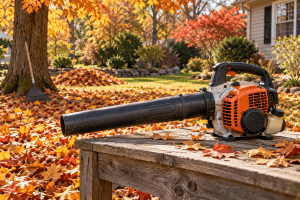
Fall Leaf Blower Problems: Why Your Leaf Blower
Won't Start, Loses Power, or Keeps Stalling
Fall is a beautiful time of year in New Jersey, with colorful trees, cooler temperatures, and crisp autumn air. But for homeowners, it also brings one of the season’s biggest outdoor chores: cleaning up fallen leaves.
A dependable leaf blower can make that job significantly easier. Instead of spending hours raking leaves from lawns, driveways, walkways, and garden beds, you can clear large areas much more efficiently.
But what happens when your leaf blower refuses to start, suddenly loses power, or keeps shutting off while you’re working?
Unfortunately, leaf blower problems often appear at the worst possible time—right when your yard is covered with leaves and you need your equipment the most.
The good news is that many common leaf blower problems have identifiable causes. Some can be corrected with routine maintenance, while others require professional small-engine repair.
Understanding what causes these problems can help you avoid unnecessary frustration, prevent additional equipment damage, and keep your fall cleanup on schedule.
1. Why Won't My Leaf Blower Start?
One of the most common complaints about gas-powered leaf blowers is that they simply refuse to start.
You may pull the starter cord repeatedly, hear the engine attempt to turn over, or notice that the equipment briefly starts before immediately shutting down.
Several problems can contribute to these symptoms.
Old or Contaminated Fuel
Gasoline doesn’t stay fresh indefinitely. When fuel sits inside small-engine equipment for extended periods, it can deteriorate and leave deposits in the fuel system.
These deposits may restrict fuel flow or interfere with the carburetor’s ability to deliver the proper fuel-and-air mixture.
This is particularly common when a leaf blower has been stored since the previous fall with gasoline remaining in the tank.
Signs of fuel-related problems include:
- Difficulty starting after extended storage
- An engine that starts briefly and then stops
- Rough or inconsistent idling
- Hesitation when accelerating
- Reduced overall engine performance
What you can do: Check the condition of the fuel and replace stale gasoline with fresh fuel that meets the manufacturer’s specifications.
If your blower uses a two-cycle engine, be certain the gasoline and two-cycle oil are mixed according to the manufacturer’s required ratio. Some equipment requires a specific premixed fuel.
Never assume that all gas-powered leaf blowers use the same fuel mixture.
If fresh fuel doesn’t correct the problem, the carburetor or fuel delivery system may need professional attention.
An Incorrect Starting Procedure
Sometimes, the problem isn’t a mechanical failure at all.
Gas-powered leaf blowers often require a particular sequence involving the ignition switch, primer bulb, choke, and starter cord.
For example, a cold engine may require the choke to be engaged, while a warm engine may need a different starting procedure.
Using the choke incorrectly can flood the engine with excess fuel, making it even more difficult to start.
What you can do: Consult your owner’s manual and follow the starting instructions for your particular make and model.
Repeatedly pulling the starter cord without following the correct procedure can make the situation worse.
2. A Dirty Air Filter Can Reduce Engine Performance
Your leaf blower’s engine needs a steady supply of clean air to operate properly.
As you work outdoors, dust, dirt, pollen, and fine debris can accumulate inside the air filter.
Over time, this buildup restricts airflow and interferes with the engine’s ability to maintain the proper air-to-fuel mixture.
A clogged air filter may cause:
- Difficulty starting
- Reduced engine power
- Rough idling
- Excessive fuel consumption
- Increased exhaust smoke
- Stalling during operation
Because leaf blowers operate in dusty environments, air filter maintenance is especially important during the fall cleanup season.
How to Check Your Air Filter
Before performing maintenance, shut off the engine and allow it to cool completely. Disconnect the spark plug wire to prevent accidental starting.
Locate the air filter housing and carefully remove the filter according to the manufacturer’s instructions.
Inspect it for dirt, damage, and excessive buildup.
Some filters can be cleaned, while others must be replaced. Always follow your equipment manufacturer’s recommendations.
Never operate a gas-powered leaf blower without its air filter installed. Doing so can allow abrasive dirt and debris to enter the engine and cause serious damage.
Keeping the air filter clean is one of the simplest ways to maintain reliable equipment performance.
3. Why Does My Leaf Blower Lose Power While Running?
Another frustrating problem occurs when a leaf blower starts normally but struggles to maintain power.
You may notice that the engine sounds weaker than usual, the airflow decreases, or the blower hesitates when you squeeze the throttle.
Several mechanical or maintenance-related issues can cause this behavior.
Restricted Air Intake
Leaf blowers move large volumes of air, and their intake openings must remain clear.
Leaves, dirt, grass clippings, and other debris can accumulate around the intake screen and interfere with airflow.
When airflow becomes restricted, the blower may deliver less air through its nozzle. Some blockages may also contribute to overheating.
Inspect the intake area regularly and remove visible debris only after the engine is shut off, all moving parts have stopped, and the equipment has cooled.
Never reach into the blower housing or attempt to clear an obstruction while the equipment is running.
Fuel Delivery Problems
Your engine depends on a consistent supply of fuel.
A partially blocked fuel filter, damaged fuel line, or carburetor problem can restrict that supply.
The engine may idle normally but struggle when additional power is required.
This can produce symptoms such as hesitation, surging, reduced acceleration, or stalling when the throttle is increased.
Although replacing an accessible fuel filter may be straightforward on certain models, diagnosing carburetor and fuel system problems often requires more specialized knowledge.
Spark Plug Problems
A spark plug ignites the fuel-and-air mixture inside a gasoline engine.
When the spark plug becomes worn, damaged, or coated with carbon deposits, ignition performance may become inconsistent.
Symptoms can include hard starting, rough running, reduced power, and engine misfires.
A spark plug inspection is often part of routine small-engine maintenance.
If replacement is necessary, be sure to use the correct spark plug type and electrode gap specified by the manufacturer.
Installing the wrong spark plug can create additional engine problems.
4. Why Does My Leaf Blower Keep Stalling?
A leaf blower that repeatedly stalls can turn a relatively simple yard cleanup into an exhausting task.
Perhaps the engine runs normally for several minutes before shutting off. Or maybe it stalls whenever you press the throttle.
The timing of the problem can provide useful clues.
Stalling Immediately After Starting
When an engine starts but dies within seconds, possible causes include stale fuel, an incorrect choke setting, a dirty air filter, or a restricted fuel system.
Check the simple maintenance items first.
If the blower consistently starts and immediately stops despite fresh fuel and proper starting procedures, additional diagnosis may be necessary.
Stalling When Accelerating
If your blower idles but stalls when you increase the throttle, the engine may not be receiving sufficient fuel to meet the increased demand.
Fuel restrictions and carburetor problems are possible causes.
A clogged exhaust spark arrestor screen, where fitted, may also restrict exhaust flow and reduce performance.
Because fuel and exhaust system problems can have similar symptoms, identifying the actual cause is important before replacing parts.
Stalling After Running for Several Minutes
Some leaf blowers perform normally when first started but begin losing power as they warm up.
Possible causes include overheating, restricted airflow, fuel delivery problems, and ignition components that malfunction as temperatures increase.
If your blower unexpectedly shuts down after extended operation, stop using it and allow the engine to cool.
Inspect accessible air intake openings for debris.
If the problem continues, professional inspection can help determine whether overheating or another mechanical issue is responsible.
Continuing to operate an engine that repeatedly overheats can result in more serious damage.
Check the Engine Oil Before Winter
Snowblowers work hard—often in extremely cold conditions and under heavy loads.
Clean oil at the proper level is important for protecting the engine.
Before winter, the oil level and condition should be checked according to the manufacturer’s recommendations. Oil that is dirty, contaminated, low, or due for replacement should be addressed before the machine returns to regular use.
Oil requirements vary by engine, so the correct type and viscosity for the specific snowblower should always be used.
It is a relatively simple maintenance item that can play a major role in long-term engine reliability.
5. Your Leaf Blower Starts, But the Airflow Seems Weak
Not every leaf blower problem involves the engine itself.
Sometimes the engine sounds normal, but the blower doesn’t move leaves as effectively as it once did.
This can indicate a restriction or problem involving the air-moving components.
Common possibilities include:
Blocked intake screens: Leaves and debris can reduce the amount of air entering the blower.
Obstructed blower tubes: Debris trapped inside the tube can reduce air output.
Damaged or loose attachments: Improperly connected tubes may affect airflow and performance.
Fan or impeller damage: Worn or damaged internal components may prevent the blower from moving air efficiently.
Check that all attachments are correctly assembled and secured.
Inspect accessible openings only when the equipment is completely shut off and safe to handle.
If the engine operates normally but airflow remains unusually weak, internal components may need inspection.
6. Don't Ignore Unusual Noises, Vibrations, or Smoke
Small-engine equipment naturally produces some vibration and noise during operation.
However, sudden changes in how your leaf blower sounds or feels shouldn’t be ignored.
Excessive Vibration
Unusual vibration can indicate loose hardware, damaged components, or problems involving the blower’s rotating parts.
Continuing to use equipment with excessive vibration may cause additional wear or damage.
Stop using the blower until the cause has been identified.
Unusual Mechanical Noises
Grinding, rattling, scraping, or knocking sounds may indicate internal mechanical problems.
These sounds deserve attention, particularly if they appear suddenly or become progressively worse.
Excessive Exhaust Smoke
A small amount of smoke may be normal under certain operating conditions, particularly with some two-cycle engines.
However, excessive or persistent smoke may indicate an improper fuel mixture, restricted airflow, or another engine problem.
If smoke is accompanied by unusual noises, significant power loss, or overheating, shut down the equipment and arrange for an inspection.
Never operate gasoline-powered leaf blowers inside garages, sheds, or other enclosed spaces. Their exhaust contains carbon monoxide, which can be deadly.
7. Gas-Powered vs. Battery-Powered Leaf Blower Problems
Not all leaf blowers operate the same way.
Gas-powered models rely on combustion engines, while battery-powered models use electric motors.
As a result, some troubleshooting procedures are different.
Common Gas-Powered Leaf Blower Problems
Gas-powered leaf blowers may experience:
- Stale or contaminated gasoline
- Carburetor problems
- Clogged fuel filters
- Worn spark plugs
- Dirty air filters
- Incorrect fuel mixtures
- Engine overheating
Routine maintenance is especially important because gasoline engines contain multiple systems that must work together.
Common Battery-Powered Leaf Blower Problems
Battery-powered equipment may experience reduced operating time, charging problems, intermittent shutdowns, or weak airflow.
Potential causes include:
- A discharged or deteriorating battery
- Dirty battery contacts
- Battery overheating
- Restricted air intakes
- Electrical or motor problems
For battery-powered equipment, begin by checking the battery charge and ensuring the battery is correctly installed.
Allow an overheated battery to cool according to the manufacturer’s instructions.
Never open, puncture, or attempt to repair a damaged lithium-ion battery. A swollen, leaking, or excessively hot battery should be handled according to the manufacturer’s safety and disposal guidance.
Regardless of power source, regular inspection and proper storage can help extend equipment life.
8. How to Prevent Leaf Blower Problems During Fall Cleanup
Preventative maintenance is often less expensive and less frustrating than waiting for equipment to break down.
A few simple habits can help keep your leaf blower operating reliably throughout the season.
Inspect Your Equipment Before Heavy Use
Before tackling a large cleanup project, examine your blower for loose components, visible damage, and blocked intake areas.
Make sure the blower tubes and attachments are correctly installed.
Check the condition of accessible filters and inspect the equipment for fuel leaks.
Never start or operate a blower with an active fuel leak.
Use the Correct Fuel
Always use gasoline and, where required, two-cycle oil that meet the manufacturer’s recommendations.
Avoid using fuel that has been stored for an extended period without proper treatment.
Keeping your fuel fresh can help prevent deposits that interfere with engine operation.
Clean Your Equipment After Use
Remove accumulated leaves, dirt, and debris from accessible exterior surfaces after the blower has cooled.
Pay particular attention to the air intake area.
Keeping the equipment clean helps reduce the buildup of material that can interfere with cooling and airflow.
Avoid Overworking the Equipment
Allow your blower to operate within its intended capacity.
If the engine begins overheating, makes unusual noises, or repeatedly loses power, stop and investigate.
Ignoring warning signs can turn a relatively minor maintenance issue into an expensive repair.
Follow the Manufacturer’s Maintenance Schedule
Your owner’s manual provides guidance on filter service, spark plug replacement, fuel recommendations, and other maintenance intervals.
Service requirements vary by make, model, and operating conditions.
Equipment used frequently or in extremely dusty conditions may require more attention than equipment used occasionally.
9. When Should You Take Your Leaf Blower to a Repair Shop?
Some minor maintenance tasks can be completed at home, but other problems require professional diagnosis and repair.
Consider having your leaf blower inspected if:
- It repeatedly fails to start despite fresh fuel and proper starting procedures.
- The engine starts but continually stalls.
- It loses power whenever you increase the throttle.
- You notice unusual mechanical noises or excessive vibration.
- Fuel leaks are present.
- The blower repeatedly overheats.
- The engine runs, but airflow is significantly reduced.
- You suspect a carburetor or internal engine problem.
Attempting unfamiliar repairs without the proper tools or experience can sometimes make the problem worse.
A professional inspection can help identify the underlying cause and determine whether repairing the equipment makes financial sense.
10. Is It Better to Repair or Replace Your Leaf Blower?
When equipment begins giving you trouble, it’s natural to wonder whether a replacement would be more practical.
The answer depends on several factors.
Age and Overall Condition
A well-maintained leaf blower may continue providing dependable service for years.
An older machine with multiple worn components, however, may require more extensive repairs.
Cost of Repair
A relatively simple repair involving a filter, spark plug, or fuel system component may be considerably less expensive than purchasing a replacement.
More serious internal engine damage may change that calculation.
Quality and Replacement Cost
Higher-quality equipment may justify repair because replacing it with a comparable model could be expensive.
For lower-cost consumer equipment, replacement may sometimes be the more economical option.
How Frequently You Use It
A homeowner using a blower occasionally may have different needs than someone maintaining a large property or using equipment professionally.
The best decision is based on the equipment’s condition, estimated repair cost, and expected future use.
Obtaining a professional evaluation can help you make an informed decision rather than replacing equipment unnecessarily.
11. Don't Forget End-of-Season Leaf Blower Maintenance
Once the final leaves have fallen, it’s tempting to put your leaf blower away and forget about it until next year.
Unfortunately, improper storage is one of the reasons small-engine equipment develops starting problems.
Before putting your equipment away for the winter:
- Clean the exterior and remove accumulated debris.
- Inspect accessible components for damage or excessive wear.
- Follow the manufacturer’s fuel-storage recommendations.
- Check whether the air filter requires cleaning or replacement.
- Store the blower in a clean, dry, secure location.
- Keep gasoline and equipment away from ignition sources.
- Remove and store batteries according to the manufacturer’s instructions, where applicable.
For gas-powered equipment, fuel-storage procedures vary. Some manufacturers recommend removing fuel before long-term storage, while others specify the use of an appropriate fuel stabilizer.
Always follow your particular manufacturer’s guidance.
A little attention at the end of the season can make a significant difference when you need the equipment again.
12. Keep Your Leaf Blower Working With Help From Pancoast Repair
Fall cleanup is difficult enough without unreliable equipment slowing you down.
Whether your leaf blower refuses to start, loses power, stalls unexpectedly, or simply isn’t performing the way it should, addressing the problem early can help prevent additional damage.
At Pancoast Repair in New Egypt, New Jersey, we provide maintenance and repair services for small-engine equipment, including leaf blowers, string trimmers, chainsaws, pole saws, and more.
Our small-engine services include inspections, preventative maintenance, spark plug and filter replacement, engine adjustments, carburetor repairs, and other repairs as needed.
Instead of struggling with a malfunctioning leaf blower or purchasing replacement equipment before you know what’s wrong, let us help you evaluate your repair options.
Convenient Pickup & Delivery and 24/7 Equipment Check-In
At Pancoast Repair, we understand that finding time to bring equipment in for service isn’t always easy. That’s why we offer convenient options to make the repair process simpler.
Pickup & Delivery Service: We offer equipment pickup and delivery within a 60-mile radius of our New Egypt, NJ location for a nominal fee. Whether you’re having trouble transporting your equipment or simply want to save time, this service can make getting repairs more convenient.
24/7 Equipment Check-In Stand: Can’t make it during regular business hours? Our convenient 24-hour, 7-day-a-week equipment check-in stand allows customers to drop off equipment for service outside normal business hours.
Whether you need routine maintenance or help diagnosing a stubborn engine problem, Pancoast Repair makes it easier to get your equipment serviced and back to work.
Visit PancoastRepair.com to learn more about our small-engine maintenance and repair services or to request a free estimate.
Keep your outdoor equipment working when you need it most—this fall and throughout the year!
637 Route 539
New Egypt, NJ 08533
609-758-6555